
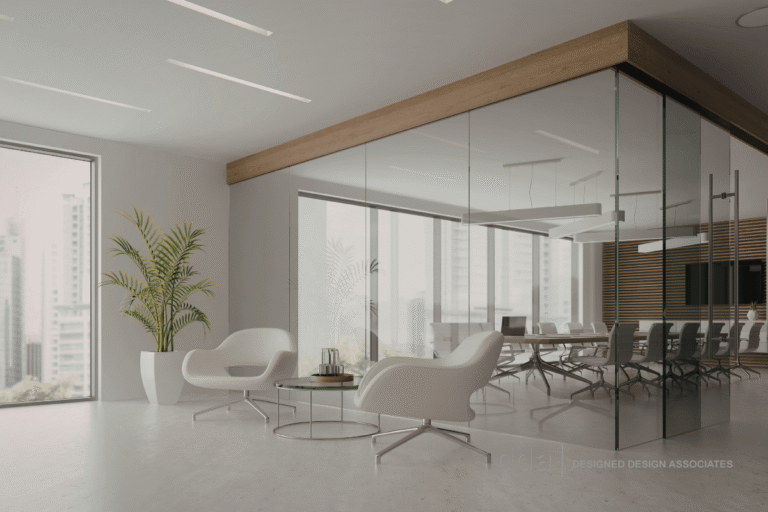
Kuala Lumpur’s commercial real estate market is evolving rapidly. As Grade A office supply grows and tenant expectations rise, the quality of a workplace fit-out has become a meaningful differentiator — for attracting and retaining talent, for impressing clients, and for communicating the ambition and culture of the organisations that inhabit these spaces. Office interior design in Kuala Lumpur is no longer an afterthought in the real estate decision — it is a core business investment.
The changing nature of the KL workplace
Malaysian businesses are navigating the same post-pandemic workplace transition as their counterparts globally — hybrid working models, the need for purposeful office environments that draw people in rather than mandate their presence, and a growing recognition that the office must offer something that working from home cannot. The answer lies in design: offices that are genuinely inspiring, socially vibrant, and functionally excellent.
What DDA brings to commercial interior design in Malaysia
DDA brings genuine commercial interior design expertise to office projects in Kuala Lumpur. Our team understands the specific requirements of the Malaysian commercial market — DBKL and BOMBA compliance, JKR standards, landlord fit-out guidelines for Grade A buildings in the Golden Triangle and beyond — as well as the design intelligence required to create workplaces that perform at a high level. When organisations search for office interior design services in KL, they need a commercial interior design firm that combines design creativity with operational rigour.
Key design principles for KL offices
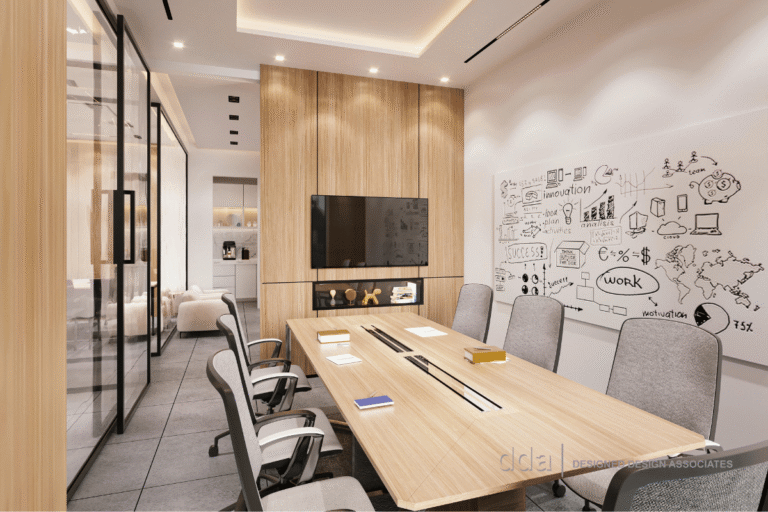
Activity-based working has transformed how KL offices are planned. Rather than rows of assigned desks, the best modern offices in Malaysia offer a curated landscape of work settings — focus zones for deep work, collaborative areas for teamwork, social spaces for informal interaction, and client-facing areas that communicate the company’s brand. Each setting is designed for its specific purpose, with appropriate acoustics, lighting, and furniture.
Cultural sensitivity in workplace design is also increasingly important in Malaysia’s diverse business environment. The best KL office interiors reflect the cultural values of the organisation while creating an inclusive environment that welcomes all employees and visitors.
Designing for productivity and wellbeing
Biophilic design — the integration of natural elements into the built environment — has been shown to reduce stress, improve cognitive function, and increase job satisfaction. In a KL office context, this means living walls, natural light optimisation, indoor planting, natural material finishes, and views of greenery where possible. Combined with excellent acoustic design and ergonomic furniture, these elements create a workplace where people genuinely feel better and perform at a higher level.
DDA designs offices in Kuala Lumpur that reflect the ambition of the organisations that inhabit them. Whether you are planning a new fit-out, relocating, or reimagining an existing space, we would welcome a conversation about what exceptional workplace design could do for your business. Contact DDA today.
📞 Contact us today to begin your interior design journey .
Q1: How much does an office fit-out cost in Kuala Lumpur?
A1: Office fit-out costs in Kuala Lumpur typically range from RM 80 to RM 250 per square foot for a mid-to-high specification commercial interior, depending on the quality of finishes, spatial complexity, and M&E scope. Premium office fit-outs with bespoke joinery, high-end furniture, advanced AV and lighting systems, and extensive biophilic design elements may exceed RM 300 per square foot. Design fees are typically charged at 10 to 15 percent of construction cost, or as a fixed project fee agreed at the outset.
Q2: What are the key trends in office interior design in Malaysia in 2026?
A2: Key office interior design trends in Malaysia in 2026 include: activity-based working environments with varied settings for focus, collaboration, and social interaction; biophilic design with living walls, natural materials, and optimised natural light; hospitality-influenced reception and client-facing spaces; acoustic privacy solutions including pods, booths, and sound-masking systems; and sustainability-focused design using locally sourced materials, energy-efficient lighting, and responsible procurement. There is also growing interest in culturally informed design that reflects Malaysia’s diverse heritage.
Q3: How long does an office fit-out take in Kuala Lumpur?
A3: A typical office fit-out in Kuala Lumpur takes between 10 and 20 weeks from design brief to occupation, depending on floor area and complexity. The design phase — including space planning, technical drawings, and material specification — usually takes 4 to 8 weeks. Procurement and construction typically run 6 to 14 weeks. Larger or more complex projects involving significant M&E works, structural changes, or imported materials may take longer. BOMBA and building management approvals should be factored into the programme from the outset.
Q4: What should I consider when choosing an office building in KL for fit-out?
A4: When selecting an office building in Kuala Lumpur for fit-out, key considerations include: the landlord’s fit-out guide and what it permits or restricts; the building’s floor-to-ceiling height and structural grid, which affect spatial planning options; the location and capacity of M&E infrastructure; natural light availability and orientation; the building’s Green certification (GBI, LEED, or MSPO), which may affect material and system choices; and the landlord’s fit-out contribution or rent-free period, which affects the overall financial model for the fit-out.
Q5: Is it worth investing in a high-quality office fit-out in Malaysia?
A5: Yes, investing in a high-quality office fit-out in Malaysia delivers measurable returns. Research consistently shows that well-designed offices improve employee productivity, reduce absenteeism, and improve talent retention — all of which have direct financial implications. For client-facing organisations, a premium office environment communicates quality and credibility that can materially affect business development outcomes. In Malaysia’s increasingly competitive talent market, a workspace that genuinely supports how people work — and makes them want to be there — is a meaningful competitive advantage.