
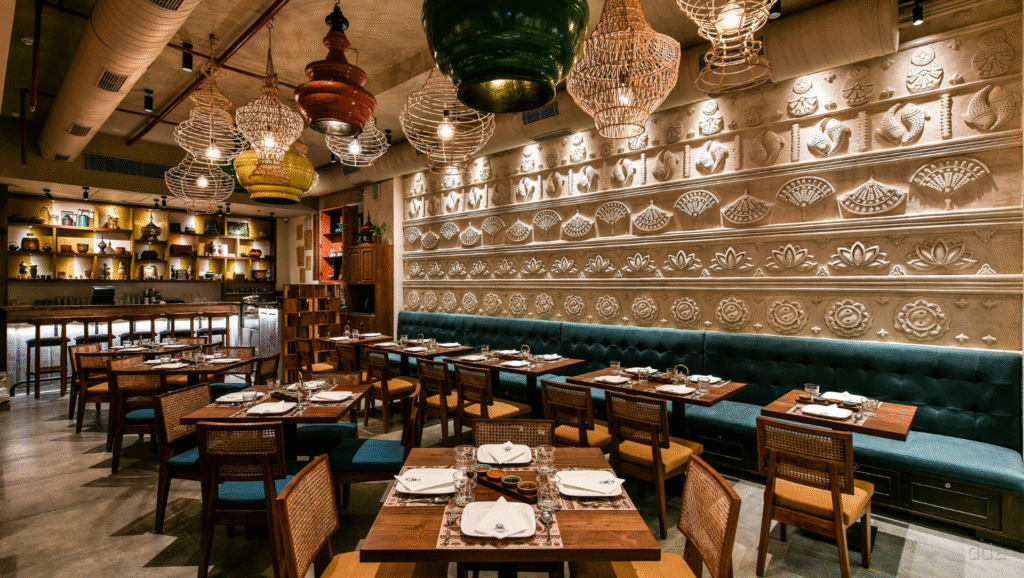
Kuala Lumpur’s dining scene has always been a vibrant tapestry of cultures and flavours. But as we look towards 2025, a new level of sophistication is taking hold. The city’s diners, more discerning and globally aware than ever, are seeking more than just a meal; they are craving immersive experiences, authentic stories, and a genuine sense of place.
In this highly competitive landscape, interior design has become the critical differentiator. It is the silent language of your brand, the architect of the customer experience, and the most powerful tool for carving out a unique identity. The era of generic, globally-copied aesthetics is over. The future of KL’s dining scene is deeply personal, culturally resonant, and strategically intelligent.
Here are the five defining restaurant interior design trends for 2025 that are shaping the future of hospitality in Kuala Lumpur.
1. The New Heritage: Modern Malaysian Abstraction
Authenticity is the new luxury. This trend moves beyond literal or cliché interpretations of Malaysian culture (like slapping batik on a wall) and into a more sophisticated, abstract realm. It’s about capturing the spirit of Malaysia in a contemporary and globally appealing language.
- What it is: A design philosophy that reinterprets traditional Malaysian motifs, materials, and craftsmanship in modern forms.
- Why it’s trending: Diners, both local and international, are seeking a genuine sense of place. This trend offers a unique, non-replicable identity that is proudly Malaysian yet undeniably modern, creating a powerful brand story.
- How to implement it:
- Materials: Using local timbers like Merbau or Balau for feature walls, and incorporating rattan or bamboo weaving in contemporary geometric patterns.
- Motifs: Abstracting the elegant patterns of songket or the geometric forms of Islamic art into subtle laser-cut screens, bespoke tilework, or even custom upholstery.
- Colour Palette: Drawing inspiration from the Malaysian landscape—the deep greens of the rainforest, the warm terracotta of traditional brickwork, the vibrant hues of a hibiscus.
2. Urban Sanctuaries: The Rise of Biophilic Escapes
KL is a bustling, energetic metropolis. The ultimate luxury for its residents is often a moment of peace and tranquility. Restaurants are becoming the city’s new urban sanctuaries, offering a respite from the concrete jungle.
- What it is: An evolution of biophilic design that goes beyond a few potted plants to create truly immersive, nature-centric havens.
- Why it’s trending: This taps directly into the global wellness movement. A space that makes people feel calm, relaxed, and connected to nature encourages them to stay longer, spend more, and return frequently.
- How to implement it:
- Lush Greenery: Creating internal courtyards (even within malls), dramatic living green walls, or incorporating mature indoor trees as centrepieces.
- Natural Elements: Maximizing natural light wherever possible and incorporating the soothing sounds of water features.
- Organic Materials: A focus on natural materials like unpolished stone, textured plaster, and soft, natural fabrics.
3. The Chameleon Restaurant: Hyper-Flexible and Dynamic Spaces
High rental costs and the need for diverse revenue streams are driving a demand for smarter, more adaptable spaces. The static, single-purpose dining room is becoming a relic of the past.
- What it is: Designing a restaurant with modular and transformable elements that allow the space to change its function and ambiance throughout the day.
- Why it’s trending: This is a business-centric trend that maximizes the revenue potential of every square foot. A single space can host a bright brunch service, an intimate dinner, and a private corporate event, all in one day.
- How to implement it:
- Intelligent Partitioning: Using elegant, custom-designed movable screens or lush curtains to create private dining spaces on demand.
- Programmable Lighting: Installing sophisticated lighting systems that can completely alter the mood from day to night at the touch of a button.
- Modular Furniture: Investing in high-quality, bespoke furniture that is designed to be easily reconfigured.
4. Curated Maximalism: Spaces with Soul and Story
This is the confident antidote to years of safe, predictable minimalism. It’s not about clutter, but about a rich, layered, and deeply personal aesthetic that tells a unique story and is filled with “discovery moments.”
- What it is: A bold and eclectic style that confidently mixes textures, patterns, and colours, often featuring bespoke art and handcrafted objects.
- Why it’s trending: It creates a one-of-a-kind, highly memorable, and eminently shareable environment. It gives a restaurant a distinct personality that stands out from the sea of sameness.
- How to implement it:
- Local Artist Collaborations: Commissioning a large-scale mural or unique art pieces from KL-based artists.
- Bespoke Elements: Designing custom furniture, unique light fixtures, or handcrafted tableware that no other restaurant has.
- Textural Depth: Fearlessly layering different materials—velvet with brass, patterned tiles with raw brick, textured wallpaper with high-gloss lacquer.
5. Seamlessly Integrated Tech: The Unseen Enhancement
Technology is no longer a novelty; it’s an expected part of the dining experience. The 2025 trend is to make this technology so well-integrated that it becomes almost invisible, enhancing the sense of effortless luxury and service.
- What it is: Embedding technology into the design in a discreet and intuitive way.
- Why it’s trending: Diners want convenience without the coldness or clumsiness of intrusive tech. This approach enhances the customer experience without disrupting the ambiance.
- How to implement it:
- Integrated Amenities: Building wireless charging pads directly into tabletops or bar counters.
- Smart Ambiance Control: Using systems that can automatically adjust music volume and lighting levels based on occupancy.
- Elegant QR Codes: Instead of cheap plastic stands, QR codes are elegantly engraved into small, beautiful objects on the table (like brass coasters or stone blocks).
The future of restaurant interior design in Kuala Lumpur is thoughtful, authentic, and strategically brilliant. By embracing these trends, you’re not just creating a beautiful space—you’re building a resilient and beloved brand for 2025 and beyond.