
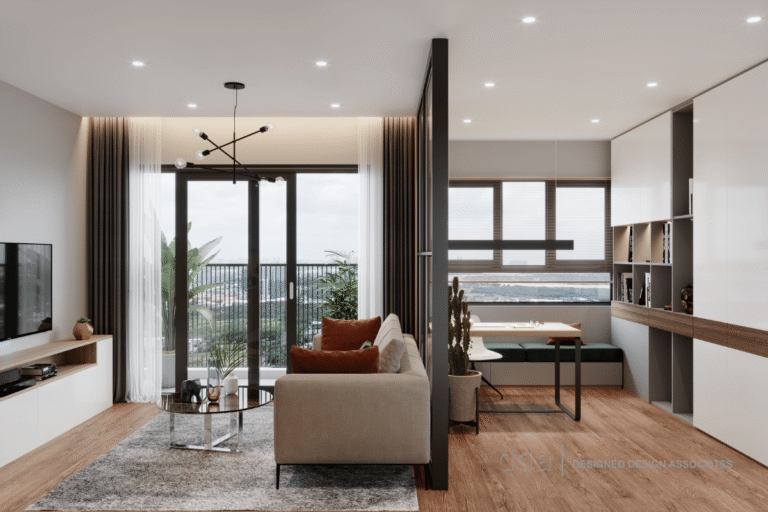
Why show unit quality directly determines sales velocity in Malaysia
In Malaysia’s property development market — characterised by intense competition, sophisticated buyers, and a digital-first research process — the quality of a show unit is one of the most directly controllable variables in a development’s sales performance. A developer cannot control the macroeconomic environment, interest rates, or competitive launches. But they can control the quality of the buyer experience at their sales gallery. And the evidence from the Malaysian property market is unambiguous: developments with exceptional show unit interior design sell faster, achieve higher prices, and build stronger brand equity for subsequent launches than those with mediocre sales environments, regardless of the underlying quality of the product.
The mechanism is straightforward but often underestimated. Property purchases in Malaysia, as everywhere, are primarily emotional decisions that are subsequently rationalised with logic. The show unit experience — what the buyer sees, feels, hears, and even smells during their visit — creates the emotional foundation for the purchase decision. A well-designed show unit activates the buyer’s imagination: it allows them to see themselves living in the space, to feel the quality of the development, and to form an emotional attachment to the product before they have even reviewed the price list. A poorly designed show unit — however technically correct — fails to activate this imagination, leaving the buyer in a purely rational, comparison-shopping mode where price and specification become the primary decision factors. An experienced interior design company specialising in developer work understands how to engineer the emotional response that the show unit needs to deliver.
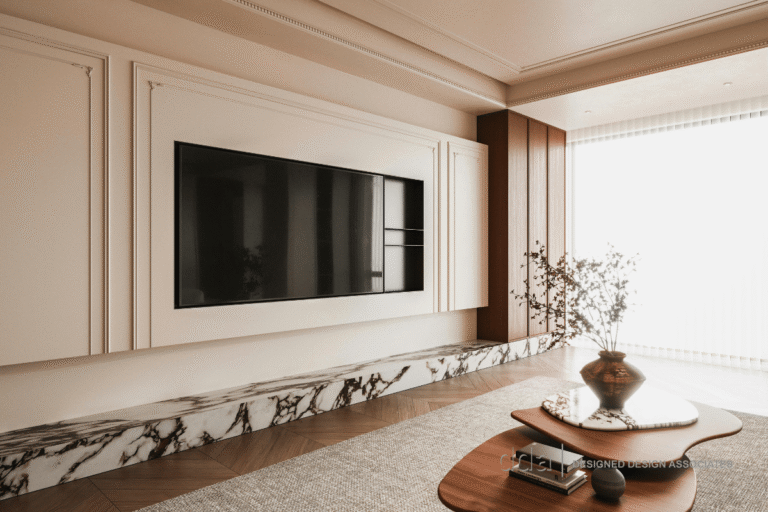
The full buyer journey: from kerb to contract
The most effective developer sales environments in Malaysia are those designed as a complete, end-to-end buyer journey — from the moment the prospective buyer turns off the road into the sales gallery car park to the moment they sign the booking form and receive their welcome package. Every touchpoint in this journey contributes to the overall impression: the landscaping and arrival sequence, the sales gallery reception and the first view of the scale model, the material library and sample displays, the comfort and design quality of the consultation areas, and finally the show unit itself. At DDA, we design developer sales environments as integrated spatial experiences — ensuring that the quality of design and the consistency of the brand message is maintained across every element, at every scale.
The digital dimension of the buyer journey is equally important in Malaysia’s property market in 2026. The majority of buyers research developments online — through portals like PropertyGuru and iProperty, through developer websites, and increasingly through social media — before they visit a physical sales gallery. This means that the show unit must perform as a digital marketing asset as well as a physical space. High-quality photography, videography, drone footage, and virtual tour content are generated from the show unit and serve as the primary marketing materials for the development across all digital channels. At DDA, we design show units with this digital performance in mind from the very beginning of the design process — making material and lighting decisions that are informed by how the space will be captured on camera as well as how it will be experienced in person.
Designing for Malaysia's diverse buyer profiles
Malaysia’s property market is served by one of the most diverse buyer populations in Southeast Asia — encompassing Malay, Chinese, Indian, and international buyer profiles, each with distinct aesthetic preferences, spatial expectations, and purchase decision dynamics. A large residential development in the Klang Valley may need to appeal simultaneously to first-generation wealth buyers for whom the show unit is an aspirational statement, established high-net-worth families for whom quality and durability are paramount, and young professional buyers for whom lifestyle and location drive the decision. An interior design company with genuine expertise in Malaysian developer work understands how to design show units that are aspirational and accessible across this spectrum — using a design language that transcends demographic specificity while still communicating a clear and compelling lifestyle proposition.
The unit type mix within a development also demands design variety within a coherent brand framework. A show unit for a studio apartment must communicate smart space planning and the lifestyle possibility of urban living. A show unit for a family-sized unit must communicate warmth, practicality, and the possibility of a genuinely comfortable family home. A show unit for a penthouse must communicate exclusivity, luxury, and the reward of exceptional achievement. Each of these narratives requires a distinct interior design approach — and each must be recognised by the prospective buyer as part of the same development brand. This challenge — of creating variety within coherence — is one of the most demanding in developer interior design, and one that DDA approaches with the same rigour we bring to our luxury residential and commercial interior design work.
Post-launch value: the show unit as an ongoing asset
A well-designed show unit in Malaysia does not stop generating value at launch. In the months after a development launch — during which ongoing sales may continue for one to three years in a large project — the show unit serves as the primary sales tool for every subsequent prospect visit. The quality of its design, the robustness of its materials and finishes under continuous public use, and the ongoing presentation of the space (which requires regular maintenance, styling, and occasional refresh) directly affect the conversion rate of visits throughout the sales programme. A show unit that was designed merely for the launch — with materials and finishes that look good on launch day but degrade under the wear of thousands of visitor interactions — is a liability that the developer pays for throughout the sales campaign. DDA specifies show unit materials and finishes with durability under public use as a specific design criterion, ensuring that the investment performs throughout the entire sales lifecycle.
DDA is an experienced interior design partner for property developers across Malaysia. From studio apartments to penthouse show units, from boutique developments to large-scale master-planned communities, we design sales environments that convert. Contact the DDA Malaysia development team today to discuss your upcoming launch.
📞 Contact us today to begin your interior design journey .
Q1: How does show unit design affect property prices in Malaysia?
A1: Show unit design affects property prices in Malaysia through several mechanisms. A high-quality show unit demonstrates the development’s commitment to design excellence, which gives buyers confidence that the finished product will meet the standard they are being shown. It creates an aspirational lifestyle narrative that makes buyers willing to pay a premium for the product rather than making purely value-based comparisons with competing developments. Research in the Malaysian property market suggests that premium show unit environments can support 5 to 15 percent higher achieved prices compared with developments of similar specification but inferior show unit presentation.
Q2: What is the typical cost of a show unit fit-out in Malaysia?
A2: Show unit fit-out costs in Malaysia typically range from RM 200,000 to RM 800,000 per unit, depending on unit size, specification level, and the degree of bespoke elements. Sales gallery fit-outs are typically priced separately and range from RM 400,000 to RM 2.5 million or more depending on the scale of the gallery and the level of digital and experiential technology integrated. Developers should evaluate the show unit investment in the context of the development’s total value — for a RM 500 million development, a RM 1 million sales environment investment is 0.2 percent of total value, with a potential return in accelerated sales and higher pricing that far exceeds this cost.
Q3: How early should a Malaysian property developer commission show unit design?
A3: Malaysian property developers should commission their show unit and sales gallery interior design at least 5 to 7 months before the planned launch date, and ideally earlier for larger or more complex developments. This allows adequate time for: the design and concept development phase (4 to 6 weeks), procurement of furniture, materials, and any imported or bespoke elements (4 to 8 weeks, with some specialist items requiring longer lead times), and construction and installation (6 to 10 weeks). Rushing the show unit programme to meet a launch deadline forces compromises that undermine the quality of the result and the commercial performance of the investment.
Q4: Should a developer use the same interior design firm for all show units in a large development?
A4: Yes, using a single interior design firm for all show units and the sales gallery in a large development is strongly recommended. This ensures consistency of design language, material palette, and brand presentation across all unit types — which is critical for communicating a coherent development identity to buyers across different unit categories. It also simplifies project management, as a single design team maintains oversight of the entire sales environment programme, reducing the coordination complexity and design conflicts that arise when multiple firms work on different components of the same development.
Q5: What types of technology are used in modern Malaysian property sales galleries?
A5: Modern Malaysian property sales galleries increasingly incorporate: large-format LED display walls for development branding and unit availability; interactive digital floor plan displays that allow buyers to explore unit layouts, orientations, and views; virtual reality or mixed reality headsets that provide immersive previews of units, amenities, and views before physical completion; building information model (BIM) visualisation tools that allow detailed specification review; and physical material library displays with touch-and-feel samples of flooring, joinery, and fixture options. DDA designs the interior architecture of sales galleries to integrate these technology elements seamlessly — ensuring that digital and physical experiences reinforce each other rather than competing.