
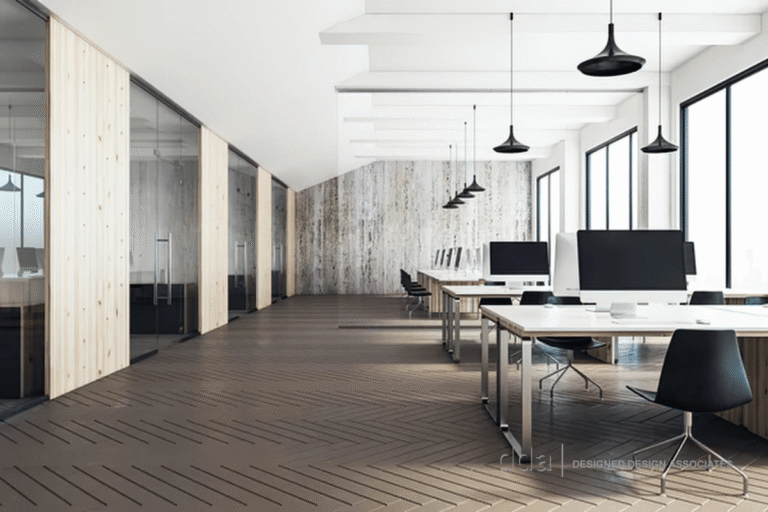
The executive office in KL’s competitive corporate landscape
Kuala Lumpur’s corporate community operates within a dense network of relationship protocols where physical environments communicate status, quality, and values more directly and more powerfully than in many Western business contexts. The executive office — the physical space in which a Malaysian business leader receives clients, conducts board-level conversations, and makes the decisions that shape their organisation — is not merely a functional workspace. It is a representation of the leader, the organisation, and the standard of quality they uphold. In KL’s professional services, financial services, and corporate sectors, where relationship capital is paramount and where first impressions in senior meetings are long-lasting, the quality of the executive office environment has direct implications for the commercial outcomes it hosts.
This commercial reality makes executive office interior design in Kuala Lumpur a discipline distinct from standard commercial interior design. A standard office fit-out is designed around operational efficiency and workforce productivity — designed for consistency and coherence at scale. An executive office is designed around a single individual, their specific identity, their specific working style, and the specific commercial conversations that will take place in the space. This radical personalisation — combined with a material and execution quality that communicates genuine investment and genuine taste — is what distinguishes a truly exceptional C-suite interior from a merely expensive one.
Understanding the brief, material specification, and technology integration for KL executive suites
DDA’s executive office design process begins with an extended consultation with the leader themselves. We do not design executive offices from a brief prepared by an office manager or a facilities team — because the qualities that make an executive office genuinely exceptional are qualities that only the executive can define. We ask: What conversations happen in this office, and with whom? What impression do you want to make on a client who enters this space for the first time? What objects, books, or art do you want present — and what do they communicate about you? Are you the kind of leader whose desk is a visible indicator of intense activity, or one whose clear desk communicates control and calm?
The material specification of a KL executive office at the C-suite level should reflect the dual imperatives of quality and appropriateness. Malaysian hardwood species — chengal, merbau, or selected FSC-certified teak — used for a bespoke desk or credenza surface communicate a material quality and cultural rootedness that imported alternatives cannot match. Regional stone, specified with attention to slab selection and surface finish, provides the material weight and permanence that executive furniture demands. Technology integration in a Kuala Lumpur executive office in 2026 must balance seamlessness with sophistication — AV for video conferencing and presentations, lighting control, climate management, and acoustic privacy systems should be as invisible as possible in the physical environment, integrated into the architecture of the space rather than applied to it as visible equipment. DDA’s commercial interior design services encompass full technology integration planning and coordination.
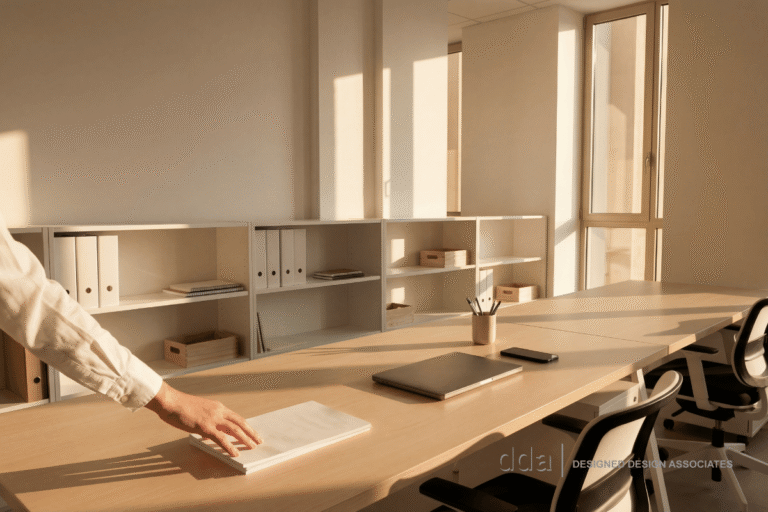
DDA’s C-suite design track record in Malaysia and how to begin
DDA has designed executive offices and C-suite environments for business leaders across Kuala Lumpur’s most demanding corporate sectors. The results — spaces that feel immediately impressive but also genuinely personal — reflect our understanding that the finest executive offices are those that could only belong to one specific person. A C-suite executive office renovation in Kuala Lumpur at a premium level typically costs between RM 150,000 and RM 500,000 for the office itself, depending on size, specification, and the extent of bespoke joinery and integrated technology. High-specification executive suites with custom stone surfaces, solid Malaysian or premium imported timber joinery, integrated AV and smart systems, bespoke lighting design, and commissioned artwork may exceed this range for larger spaces.
The investment should be evaluated in the context of the commercial conversations the space will host and the impression it makes on every senior visitor. If you are planning an executive office renovation or fitting out a new leadership space in KL, contact DDA today to arrange a private consultation with our senior commercial interior design team. We work across the Klang Valley, Penang, and Johor Bahru.
Q1: What makes a great executive office design in Kuala Lumpur?
A1: A great executive office design in Kuala Lumpur combines: a spatial design that balances formality with warmth, providing appropriate zones for focused work, two-person conversation, and small group meetings; material specifications that communicate genuine quality and investment — natural stone, premium timber, bespoke joinery with fine hardware; a lighting design with multiple layers that supports both task performance and the creation of an appropriate atmosphere for high-level meetings; seamlessly integrated technology; adequate acoustic privacy from the adjacent office environment; and personal elements — art, books, objects — that communicate the individual identity of the executive occupant.
Q2: How much does a C-suite executive office renovation cost in Kuala Lumpur?
A2: A C-suite executive office renovation in Kuala Lumpur at a premium level typically costs between RM 150,000 and RM 500,000 for the office itself, depending on size, specification, and the extent of bespoke joinery. High-specification executive suites with custom stone surfaces, solid Malaysian or premium imported timber joinery, integrated AV and smart systems, bespoke lighting design, commissioned artwork, and premium rugs and soft furnishings may exceed this range for larger spaces. The investment should be evaluated in the context of the commercial conversations the space will host and the impression it makes on every senior visitor.
Q3: Should an executive office in KL reflect the wider office design?
A3: Yes, but with a clearly elevated aesthetic register. A KL executive office should maintain a coherent design relationship with the wider office environment — using a consistent or complementary material language, referencing the overall design concept of the floor or building — while communicating an unambiguously higher level of investment and personalisation. The transition from the general office to the C-suite should feel like a progression to a more refined environment, not a discontinuity. This coherence-with-elevation is one of the more sophisticated design challenges in commercial interior design.
Q4: What acoustic treatments are important in a KL executive office?
A4: Acoustic privacy is critical in a Kuala Lumpur executive office because the conversations that take place in it — board-level strategy, sensitive HR matters, client negotiations, M&A discussions — are among the most confidential in the organisation. Acoustic treatments for a KL executive office include: heavy, full-height doors with acoustic sealing on all four edges; acoustic ceiling treatment within the office volume; soft floor coverings (carpet, rugs) that reduce reflective surfaces; fabric upholstery on furniture that provides surface absorption; and where the highest level of privacy is required, specialist acoustic consulting and possibly active sound masking.
Q5: How does executive office design differ from a general office fit-out in Malaysia?
A5: Executive office design in Malaysia differs from a general office fit-out in three fundamental ways. First, it is radically personalised — designed around the specific identity, working style, and aesthetic sensibilities of a single individual, not around a generalised workforce profile. Second, the specification quality is substantially higher — natural stone, premium timber, bespoke joinery, fine hardware, commissioned art, and hand-knotted rugs are appropriate at the executive level in ways they are not for general office areas. Third, the design brief is fundamentally different — the executive office is designed for relationship, representation, and high-level decision-making, not for operational efficiency and workforce productivity.